Easier access to a smaller house? Proposed new limit up to 50 m²
23. 10. 2026.
The proposed amendment to the regulation would raise the threshold for smaller single-family buildings from 25 to 50 m². Find out what this means for construction, land, and buyers.
Building a smaller house could become somewhat easier in the future. The Ministry of the Environment and Spatial Planning has prepared a proposal to amend the Regulation on the Classification of Structures, under which the limit for single-family buildings that can be classified as less demanding structures would be increased from the current 25 m² to 50 m² of gross floor area.
This is an interesting change primarily for individuals, young couples, smaller families, and anyone looking for a more affordable and space-efficient way of living.
What would change?
Under the current rules, a single-family building can be classified as a less demanding structure only up to a gross floor area of 25 m². The proposed change would raise this limit to 50 m². Such an area already allows for a significantly more functional home layout, with a separate bedroom, living area, kitchen, and bathroom, and is therefore much more suitable for actual long-term living.
However, it is important to emphasize that even after the change, a smaller house would not mean construction without permits. For a less demanding structure, it would still be necessary to obtain the appropriate building permit, and the construction would have to be carried out by a qualified contractor, or the investor would have to ensure appropriate supervision.
Why is the proposal interesting?
Smaller houses can be one of the answers to the increasingly difficult affordability of housing.
Due to their smaller size, they are generally:
• cheaper to build,
• cheaper to maintain,
• less energy-intensive,
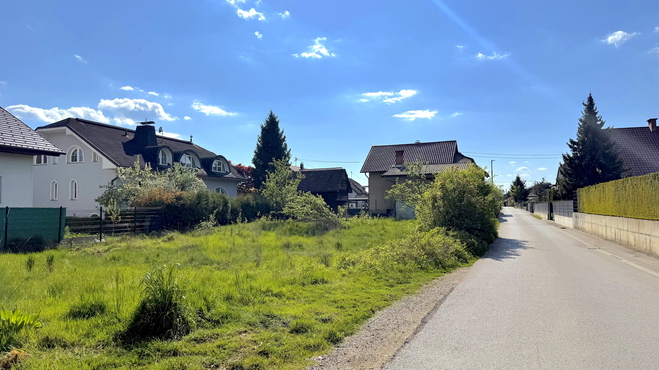
• suitable for smaller plots of land,
• appealing to individuals and smaller households.
For young buyers, they can represent a more affordable option compared to a larger traditional house. At the same time, they can also be an attractive solution for older people who no longer need a large home and would like to live in a smaller, more manageable property.
Does this mean it will be possible to build a 50 m² house anywhere?
No. Even if the proposed change is adopted, for each specific plot it will still be necessary to check the municipality's spatial planning conditions.
Key factors remain in particular:
• designated land use,
• the municipal spatial plan,
• permitted setbacks,
• site coverage ratio,
• maximum permitted building dimensions,
• access to a public road,
• availability of municipal utilities,
• any protective regimes.
Therefore, the designation of a structure as "less demanding" does not in itself mean that such a house can automatically be built on the selected land.
What does this mean for the real estate market?
If the change is adopted, smaller buildable plots where constructing a larger family house is not sensible or financially justified could also become more attractive.
This model of living could open up more opportunities for: young buyers who want their first home; older owners who want a smaller property; and also investors looking for smaller and efficient housing solutions.
While 50 m² still means a small home, it is already large enough to create a very functional and high-quality living space.
Check building options before buying land
If you are buying land with the intention of building a smaller or modular house, it is very important to check what is actually permitted to be built on the plot before purchasing. The location information and the municipality's spatial planning conditions can significantly affect whether your plan is feasible.
At Elite Property Slovenia, we can help you find suitable land and check the basic spatial planning conditions before purchase.
Source: summary of the proposed amendment to the Regulation on the Classification of Structures, published in an article by Stane Petavs, 5 Oct 2026.